Family Dictynidae O. Pickard-Cambridge, 1871
|
In case you find an error or have a specific suggestion, please follow this link: click
|
|||||||||||
| 1 |
Cribellum absent |
||||||||||
| - | Cribellum present |
||||||||||
| - | Retrotibial apophysis absent, tip of conductor straight, embolus short, epigyne with septum (intertidal species) |
| |||||||||
| 2 (1) |
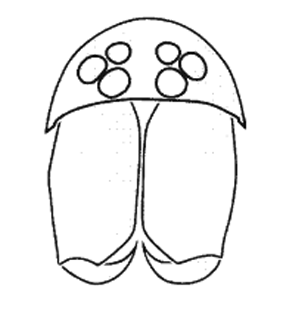
6 eyes, no yellowish pattern |
| |||||||||
| - | 8 eyes |
||||||||||
| 3 (2) |
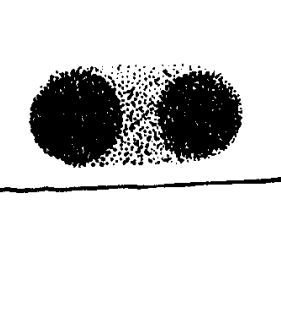
Cribellum divided (bipartite) |
||||||||||
| - | Cribellum undivided (entire) |
||||||||||
| 4 (3) |
Dark coloured, almost black, no white (guanine) pigmentation, palp with ctenidia (=small process on tibia, bearing very small spines), epigyne with ridges Dictyna |
| |||||||||
| - | Bright green or red with white (guanine) pigmentation, male palp with small patellar apophysis |
| |||||||||
| 5 (3) |
Legs with spines |
||||||||||
| - | Legs without spines |
||||||||||
| 6 (5) |
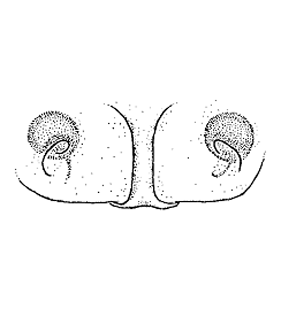
Minute (< 2 mm), spines either strong and large or small, cymbium unmodified, receptacles bean-shaped to oval |
| |||||||||
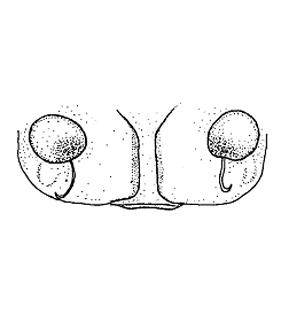
| - | Medium sized (> 2mm), spines normal on all legs, cymbium with basal fold, epigyne with septum, receptacles round |
| |||||||||
| 7 (5) |
Male palp with ctenidia (=small process on tibia, bearing very small spines), epigyne with ridges (cave: no ctenidia in Archaeodictyna ammophila which shall key out here) |
||||||||||
| - | Male palp without ctenidia, epigyne without ridges |
||||||||||
| 8 (7) |
Cephalic part of the prosoma strongly raised in males, epigyne shows anterior to the epigastric furrow two dark receptacula, close to each other |
| |||||||||
| - | Cephalic part of the prosoma not strongly raised in males, epigynal ridges present |
||||||||||
| 9 (8) |
Male chelicera with lateral boss, embolic base in centre of tegulum, makes more than 360° loop, opisthosoma dark with light transverse spot in caudal half |
||||||||||
| - | Male without lateral boss, embolic base on prolateral-basal side or central-basal, opisthosoma with dark pattern on light background |
||||||||||
| 10 (9) |
Embolus thick, not long (starts from 8-9 o’clock) |
| |||||||||
| - | Embolus thin, from not long to long (starts from 6 to 9) Dictyna |
| |||||||||
| - | Retrotibial apophysis not long, epigyne different |
||||||||||
| 11 (10) |
Male palpal patella with conical outgrowth or apophysis, receptacles round, epigyne with one shallow fovea or 2 distinct fovea, insemination duct long or very long, often with white (guanine) spots on opisthosoma Lathys |
| |||||||||
| - | Male palpal patella without outgrowth or conical apophysis, opisthosoma without white spots, epigyne variable |
||||||||||
| 12 (11) |
Basal arm of conductor stretching dorsally, screw like or spine like, epigyne with one or two fovea, insemination duct long or very long, receptacles round Lathys |
||||||||||
| - | Different |
||||||||||
| 13 (12) |
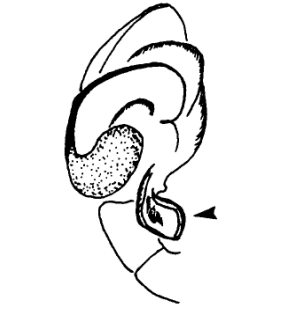
Tip of conductor long and coiled, epigyne weakly sclerotized as figure (only northern Fennoscandia and Caucasus) |
| |||||||||
| - | Tip of conductor not long and not coiled, epigyne different |
||||||||||
| 14 (13) |
Tip of conductor stretching posteriorly, retrotibial apophysis not wider than tibia, epigyne weakly sclerotized |
||||||||||
| - | Tip of conductor bent, retrotibial apophysis wider than tibia, fovea strongly chitinised (only northern Fennoscandia) |
| |||||||||
| 15 (1) |
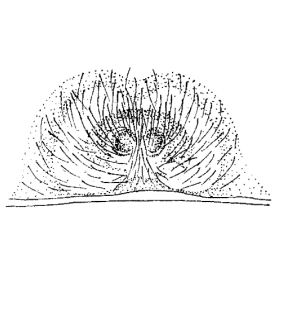
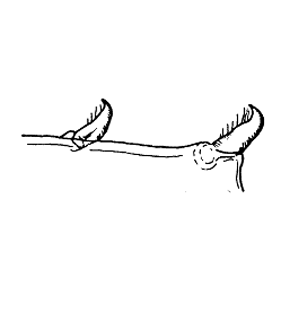
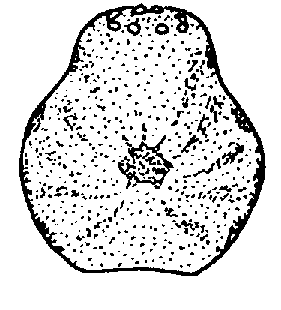
There is only one species in this enigmatic genus. It has been described as a new species 1884 by Simon, collected between grass bunches at the Spanish sea shore, but was obviously never recollected. The description contains no figures. |
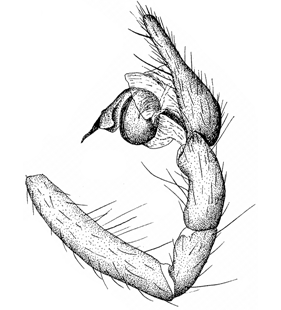
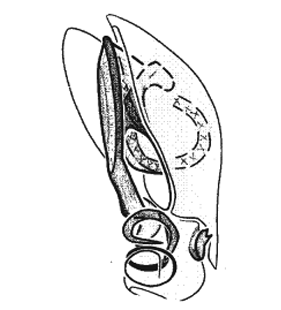
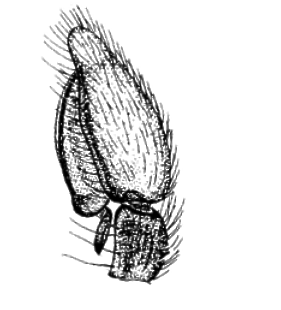
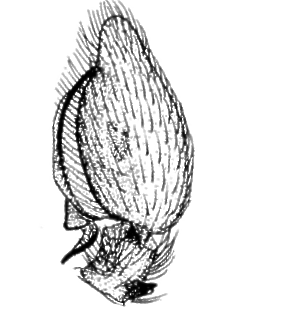
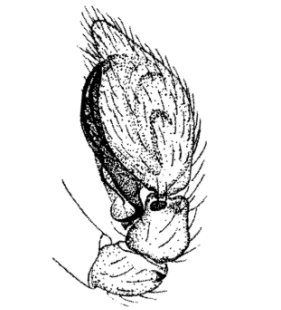
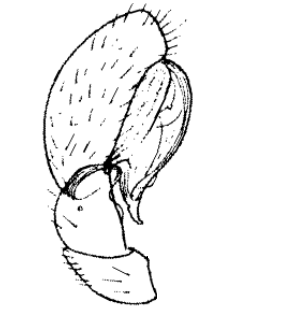
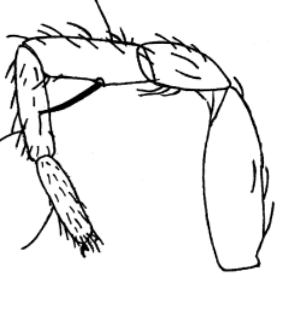
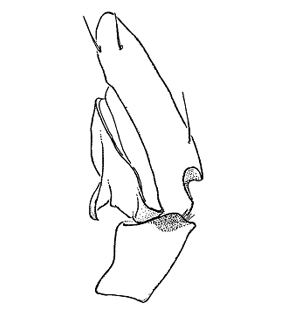
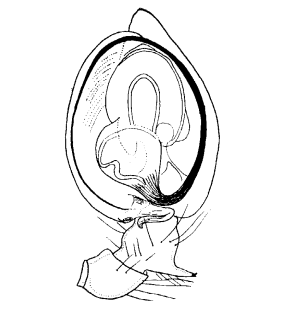
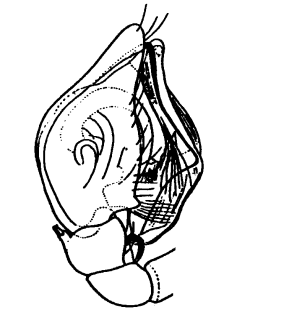
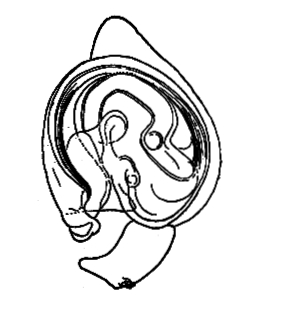
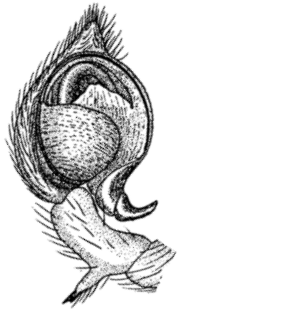
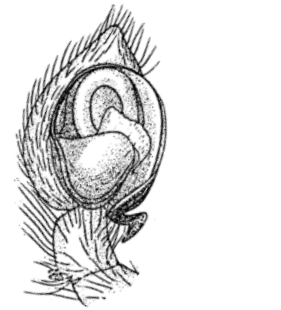
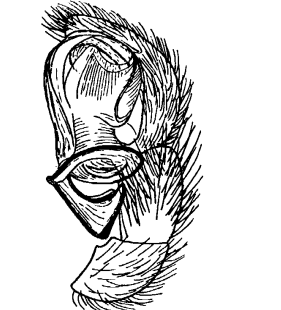
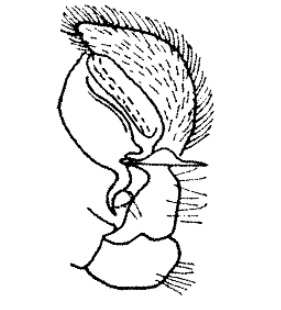
 Pedipalp, retrolateral view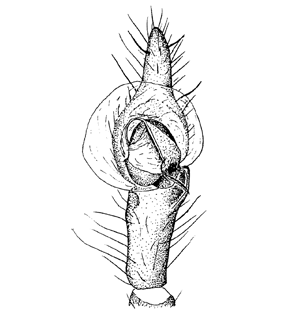
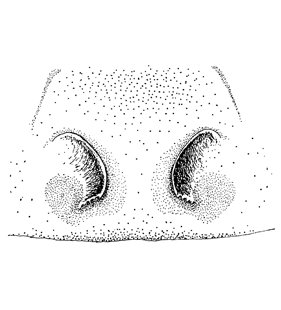
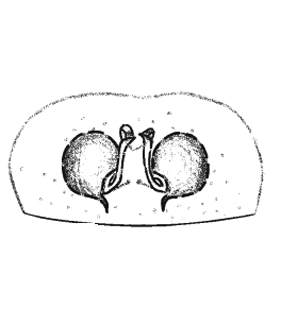
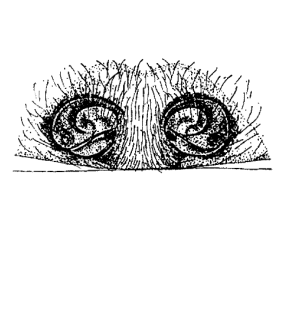
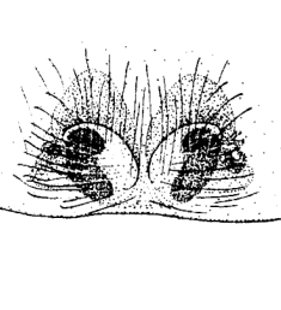
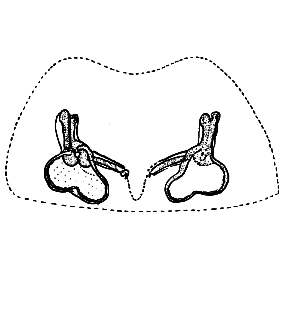
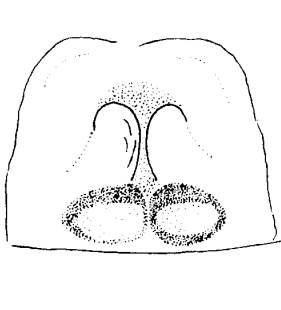
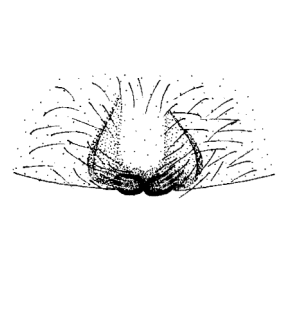
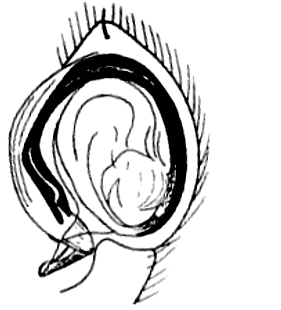
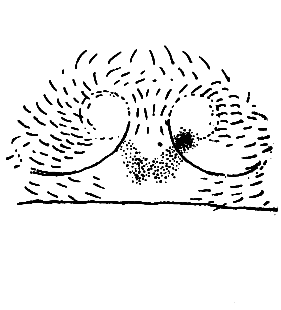
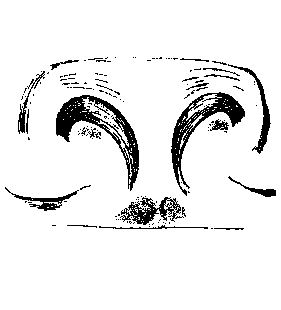
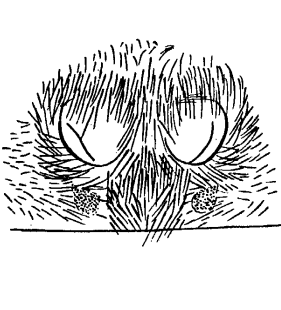
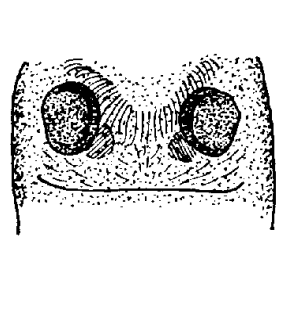
 Epigyne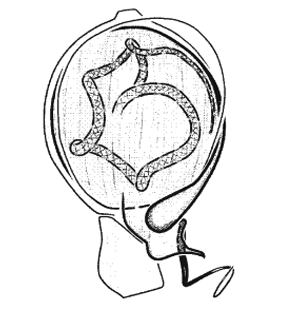
Further genera
- 1. Ajmonia
- 2. Brigittea
- 3. Nopalityna
- 4. Shikibutyna
- 5. Simziella
- 6. Spagnius
- 7. Tolkienus