Familie Cybaeidae Banks, 1892
|
Für Fehlermeldungen oder Verbesserungsvorschläge bitte Link folgen: click
|
||||||||
| 1 |
Im Wasser lebend; Körperlänge 10-12 mm; dunkelbraun-schwarz gefärbt; Spinnwarzen annähernd gleich lang; Tracheenstigma weit vorne, knapp hinter Epigastralfurche gelegen; Beine III und IV mit auffällig langer Behaarung (eine Art, selten gefunden) |
|||||||
| - | An Land lebend, Merkmale anders |
|||||||
| 2 (1) |
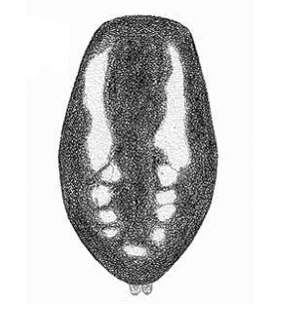
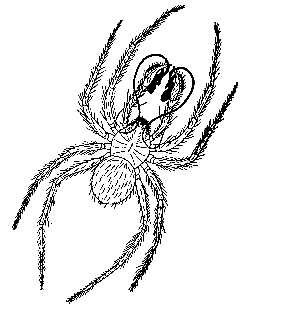
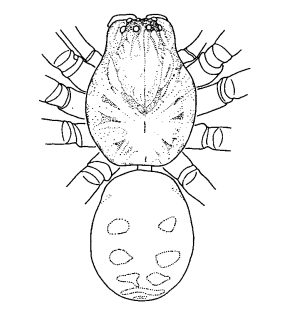
Körperlänge Weibchen 6-10 mm, Männchen 4,5-7 mm; Prosoma gelbbraun, oft mit feiner schwarzer Zeichnung; Opisthosoma grau mit heller Zeichnung; in den Mittelgebirgen, Alpen und Karpaten; vordere Spinnwarzen deutlich am längsten; Tracheenstigma in normaler Lage (knapp vor den Spinnwarzen); Beine III und IV nicht auffallend behaart (viele Arten, weit verbreitet in Europa) |
| ||||||
| - | Andere Kombination von Merkmalen |
|||||||
| 3 (2) |
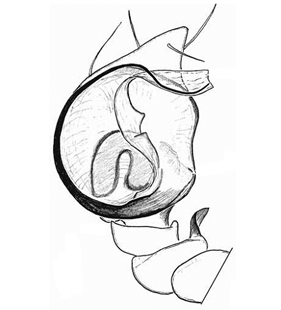
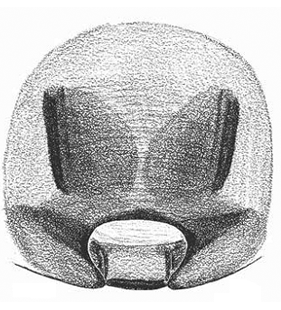
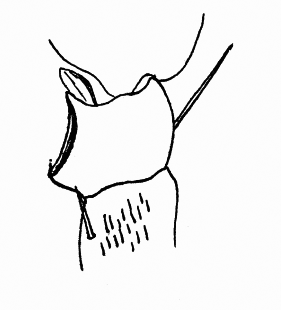
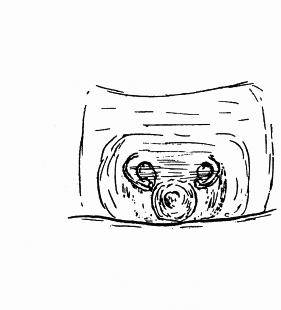
Patella des männlichen Pedipalpus mit löffelartiger Apophyse, Epigyne mit viereckiger Platte, Opisthosoma grau mit undeutlichem Muster oder Winkelflecken (eine Art, Kroatien) |
| ||||||
| - | Patella des männlichen Pedipalpus mit 2 spitzen Apophysen, Epigyne mit gerundeter Platte, Opisthosoma grau mit 2 hellen Punktstreifen (eine Art, Aserbeidschan) |
| ||||||
| - | Andere Kombination von Merkmalen |
|||||||
| 4 (3) |
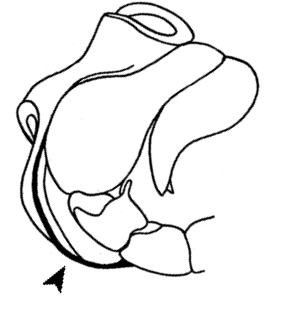
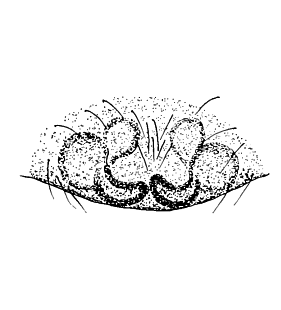
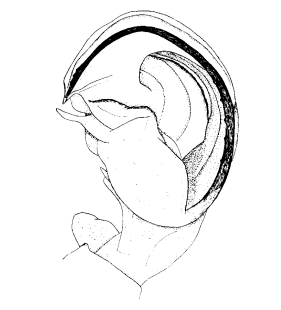
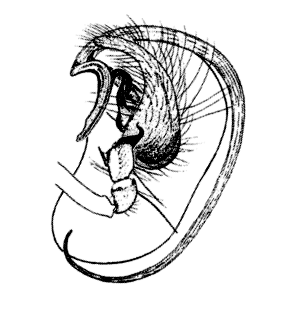
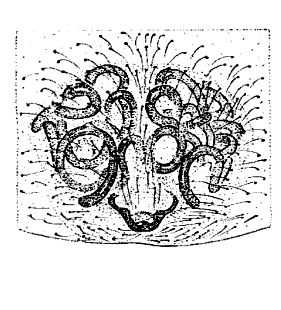
Embolus lang, gewunden, nach hinten bis an den Anfang der Tibia reichend; Epigyne mit langen, unregelmässigen Einführgängen |
| ||||||
| 5 (1) |
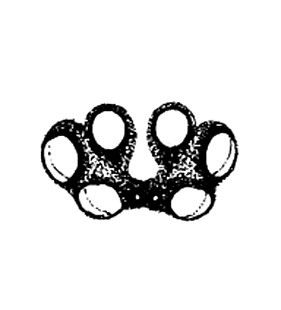
Vordere Mittelaugen sehr stark reduziert, leicht zu übersehen, daher scheinbar sechsäugig (eine Art aus Montenegro) |
| ||||||
| - | Vordere Mittelaugen kleiner als die übrigen Augen, aber gut sichtbar |
|||||||
| 6 (5) |
Prosoma mit undeutlichem Streifenmuster, männlicher Pedipalpus mit schmaler, spitzer Medianapophyse (mehrere Arten in Europa) |
| ||||||
| - | Prosoma mit breitem, mittlerem und lateralen Streifen, Medianapophyse des männlichen Pedipalpus reduziert (eine Art in den Pyrenäen) |
| ||||||
| 7 (1) |
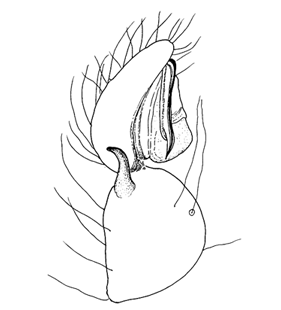
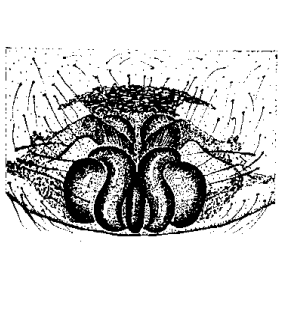
Konduktor mit sehr langem oberen Arm, länger als Cymbium, retrotibiale Apophyse spitz zulaufend, Epigyne mit spiraligem Befruchtungsgang, keine ausgeprägte Fovea und kein Septum |
|
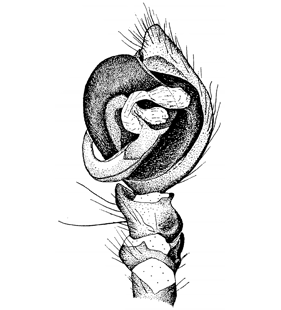
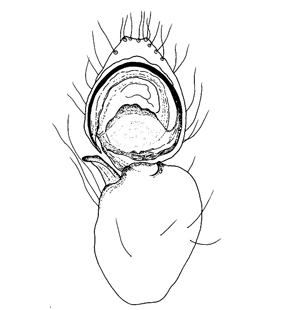
 Pedipalpus, ventral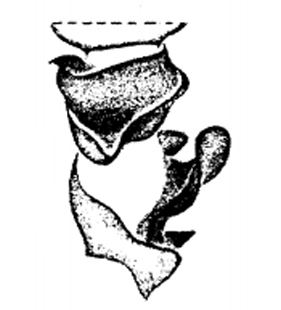
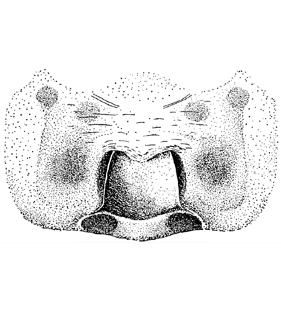
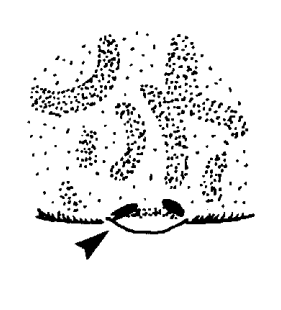
 Epigyne