Xysticus alpinus Kulczyński, 1887
Description
Palp female: compact. Epigyne has only 2 independent, protruding, longish ovate, vertical, strongly sclerotised structures instead of an epigynal groove. Vulva consisting of 2 sac-like, glandular structures. Prosoma dark red-brown. Sternum brown to dark brown, longish oval, relatively densely provided with spines. Chelicerae dark brown, frontally densely spined. Legs brown to dark brown or orange-brown, distally darker, legs provided with very robust spines. Opisthosoma grey, beige to sand-brown, partly with small, yellow-brown spots. Spinnerets brown.
Body length female: 7.8-11.4 mmAdditional information
alpine grasslands, scree slopes, rock glaciers, >2000m
Distribution
Phenology
| Jan | Feb | Mar | Apr | May | Jun | Jul | Aug | Sep | Oct | Nov | Dec |
 |  |
Figures
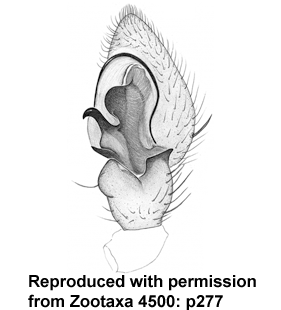
Pedipalp, retrolateral view
(Ballarin et al. 2018)
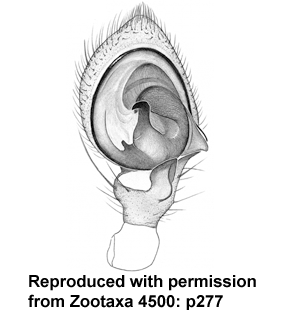
Pedipalp, mesal view
(Ballarin et al. 2018)
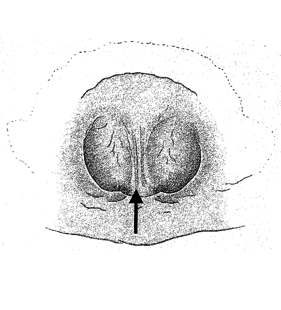
Epigyne
(Jantscher 2001a)
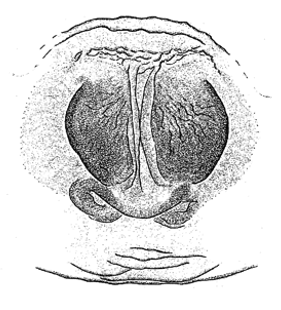
Epigyne
(Jantscher 2001a)
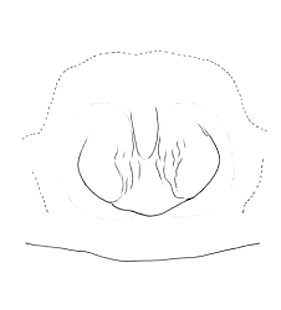
Epigyne
(Jantscher 2001a)
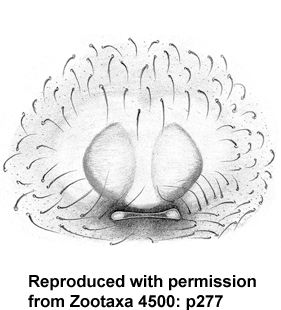
Epigyne
(Ballarin et al. 2018)
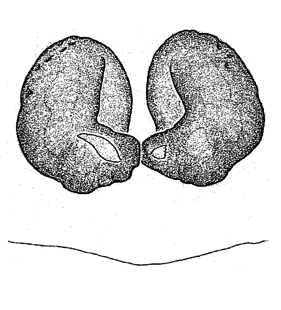
Vulva, dorsal view
(Jantscher 2001a)
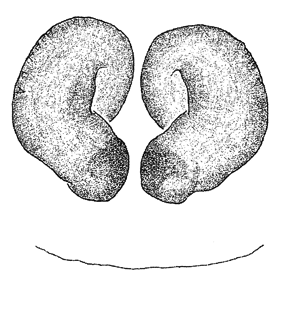
Vulva, dorsal view
(Jantscher 2001a)
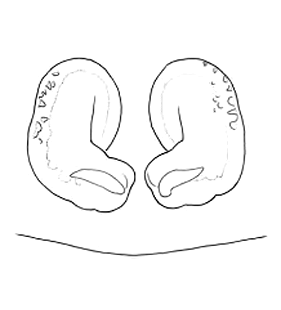
Vulva, dorsal view
(Jantscher 2001a)
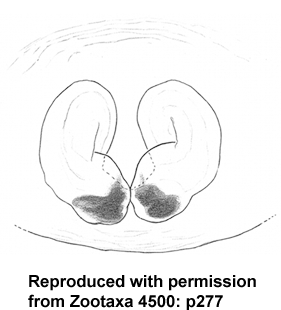
Vulva
(Ballarin et al. 2018)
Distribution List
References
Ballarin F, Pantini P, Gobbi M (2018) Elevation to species level and redescription of Xysticus alpinus Kulczyński, 1887 stat. n. (Araneae, Thomisidae). Zootaxa 4500: 271-280 
Isaia M, Tolve M, Pantini P (2025) Araneae.it: 2.0: the new updated version of the digital catalog of the Italian spiders and other arachnids (Arachnida: Araneae, Opiliones, Scorpiones, Pseudoscorpiones, Palpigradi, Solifugae). Fragmenta Entomologica 57: 197-204
Jantscher E (2001a) Revision der Krabbenspinnengattung Xysticus C.L. Koch, 1835 (Araneae, Thomisidae) in Zentraleuropa. Dissertation, Univ. Graz, 328 pp., 81 pls.
Thaler K, Knoflach B (2004b) Zur Faunistik der Spinnen (Araneae) von Österreich: Gnaphosidae, Thomisidae (Dionycha pro parte). Linzer Biologische Beiträge 36: 417-484
WSC (2026) World Spider Catalog. Version 27. Natural History Museum Bern, online at http://wsc.nmbe.ch (20.5.2026) doi: 10.24436/2