Ischnothyreus peltifer (Simon, 1892)
Beschreibung
Bulbus mit halsbandähnlicher Chitinisierung, ventral mit 2 Protuberanzen. Spermaporus klein. Prosoma hellbraun, höchster Punkt des Prosoma heller, fast weiss. Männchen: mit einem Paar dunkelbrauner, eiförmiger Flecken hinter den Augen. Sternum gelbweiss. Cheliceren gelbbraun. Beine gelbweiss, I und II mit Stacheln, III und IV ohne. Opisthosoma gelbweiss, dorsales Scutum hellbraun, glänzend, mit feinen Radiärstreifen, ventrales Scutum blass gelb.
Zusätzliche Informationen
Möglicherweise öfter mit I. velox verwechselt (Saaristo 2010: 120).
Diese Art stammt aus Asien und ist daher nicht-einheimisch für Europa. Sie wurde mindestens einmal nach Europa eingeschleppt und konnte sich etablieren.
Verbreitung
Abbildungen
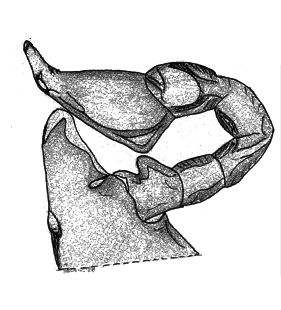
 Pedipalpus
(Saaristo 2001)
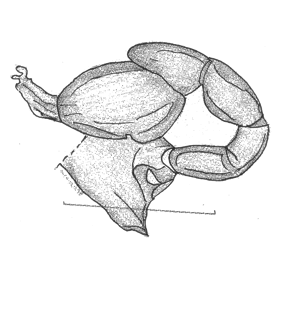
Pedipalpus
(Saaristo 2001)
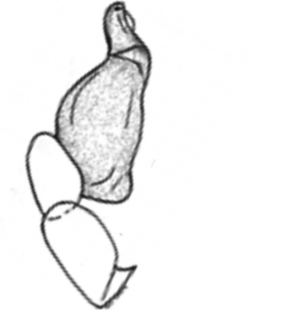
Pedipalpus, retrolateral
(Saaristo 2001)
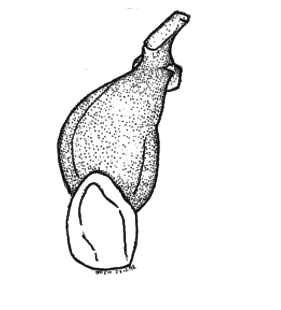
Pedipalpus, dorsal
(Saaristo 2001)
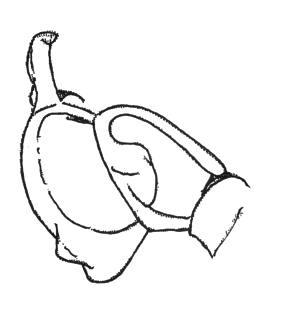
Pedipalpus, postero-dorsal
(Saaristo 2001)
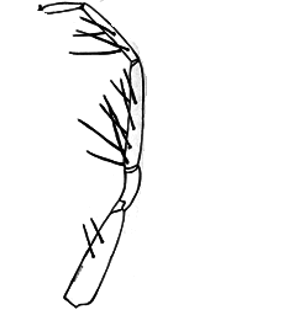
Bein I
(Saaristo 2001)
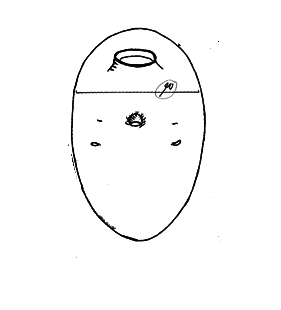
Scutum, ventral
(Saaristo 2001)
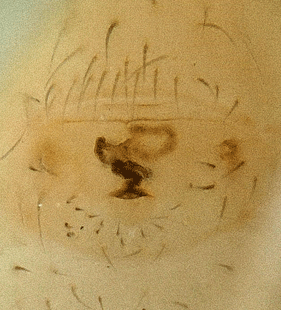
 Epigyne
(Hänggi et al. 2021)
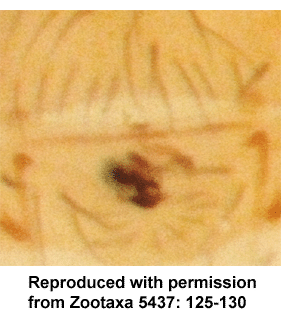
Epigyne
(Sherwood et al. 2024a)
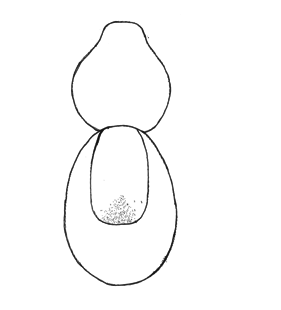
Prosoma, dorsal
(Saaristo 2001)
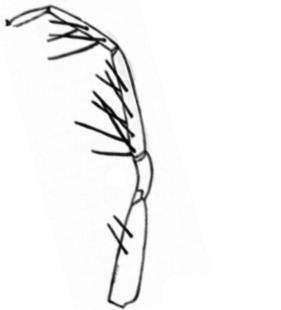
Bein I
(Saaristo 2001)
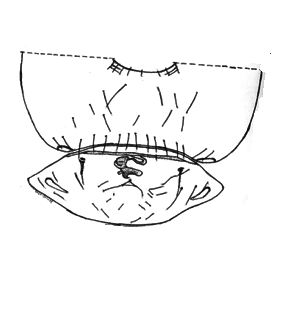
Scutum, ventral
(Saaristo 2001)
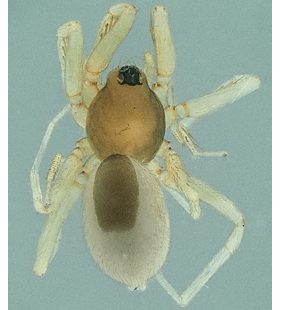
Habitus, dorsal
(Hänggi et al. 2021)
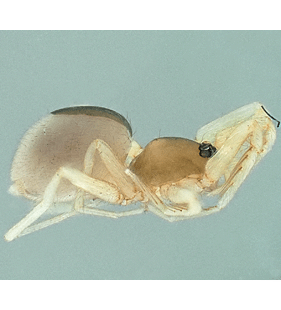
Habitus, lateral
(Hänggi et al. 2021)
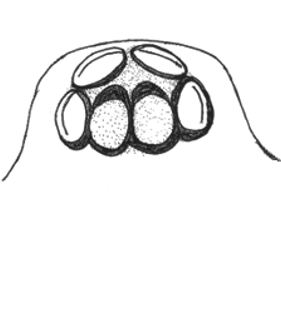
Augen, dorsal
(Saaristo 2001)
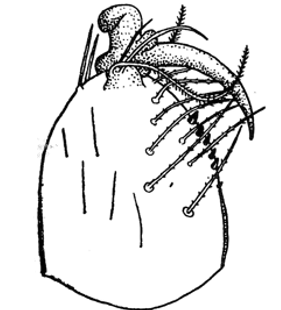
Cheliceren, ventral
(Locket & Millidge 1951)
Verbreitungsnachweise
Literatur
Hänggi A, Bobbitt I, Kranz-Baltensperger Y, Bolzern A, Gilgado J D (2021) Spiders (Araneae) from Swiss hothouses, with records of four species new for Switzerland. Arachnologische Mitteilungen 62: 67-74 
Locket G H, Millidge A F (1951) British spiders. Vol. I. Ray Society, London, 310 pp.
Saaristo M I (2001) Dwarf hunting spiders or Oonopidae (Arachnida, Araneae) of the Seychelles. Insect Systematics & Evolution 32: 307-358
Saaristo M I (2010) Araneae. In: Gerlach J & Marusik Y M (eds.) Arachnida and Myriapoda of the Seychelles Islands. Siri Scientific Press, Manchester, pp. 8-306.
Sherwood D, Dunlop J, Sharp A (2024a) On the identity of Opopaea euphorbicola Strand, 1909 and first records of three other non-native goblin spiders from Ascension Island (Araneae: Oonopidae). Zootaxa 5437: 125-130
WSC (2026) World Spider Catalog. Version 27. Natural History Museum Bern, online at http://wsc.nmbe.ch (20.5.2026) doi: 10.24436/2