Oedignatha scrobiculata Thorell, 1881
Description
Male
Pedipalp: femur arched, ventral part of tibial apophysis thumb-shaped, retrolateral part with 2 tips. Embolar base on proximal end of tegulum. Prosoma dark chestnut brown, with radiating rows of round punctuations. Prosoma length: 2.80 mm. Legs orange-brown, femora dark brown, tibia and metatarsus I middle brown and distally tinged with dark grey. Opisthosoma dark brown, shiny, with scutum, dorsum with 4 pairs of white spots.
Body length male: 4.0-5.4 mmFemale
Colouration as in males. Prosoma length: 2.40 mm. Opisthosoma with dorsal scutum, covering 7/8 of opisthosoma length, venter with an epigastric scutum.
Body length female: 4.0-5.0 mmAdditional information
Hothouse under bark.
This species of Asian origin is not native to Europe (alien species). It had been introduced to Europe at least once but could not establish so far.
Distribution
Phenology
| Jan | Feb | Mar | Apr | May | Jun | Jul | Aug | Sep | Oct | Nov | Dec |
 |  |
Figures
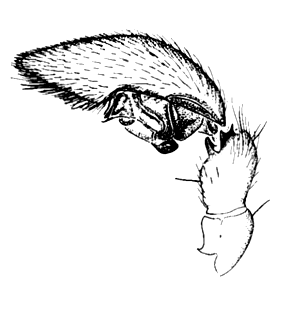
Pedipalp, retrolateral view
(Deeleman-Reinhold 2001)
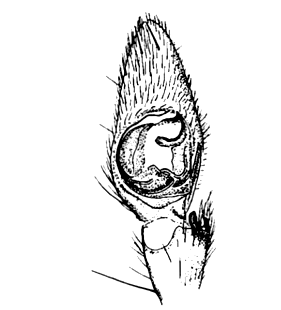
Pedipalp, ventral view
(Deeleman-Reinhold 2001)
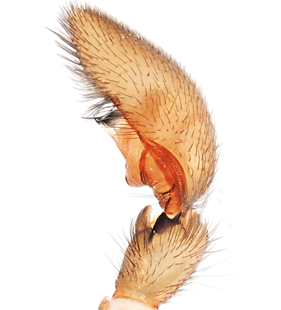
Pedipalp, retrolateral view
(Suzuki & Hisasue 2024)
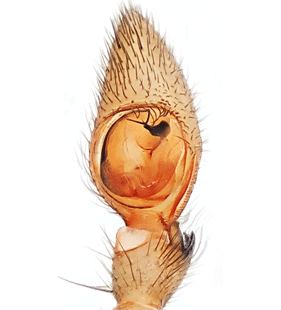
Pedipalp, ventral view
(Suzuki & Hisasue 2024)
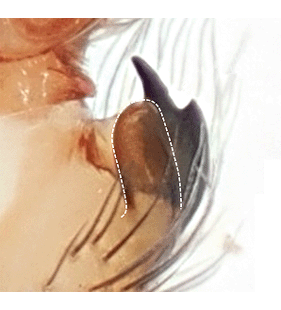
Tibial apophysis, ventral view
(Suzuki & Hisasue 2024)
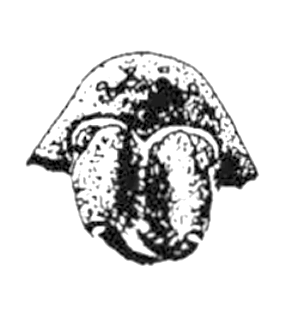
Prosoma, frontal view
(Deeleman-Reinhold 2001)
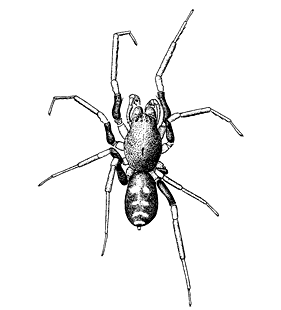
Habitus, dorsal view
(Deeleman-Reinhold 2001)
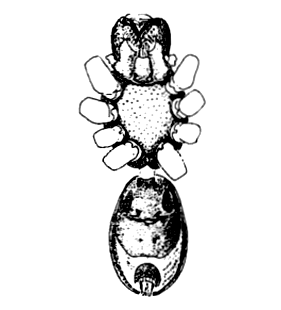
Habitus, ventral view
(Deeleman-Reinhold 2001)
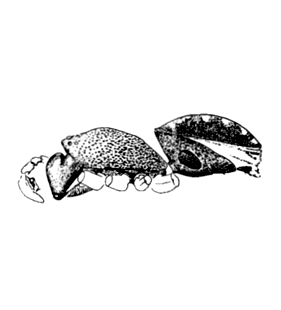
Habitus, lateral view
(Deeleman-Reinhold 2001)
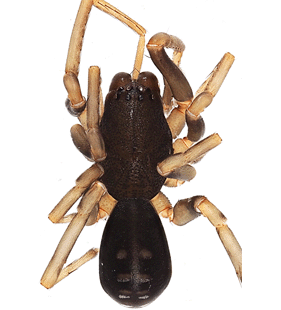
Habitus, dorsal view
(Suzuki & Hisasue 2024)
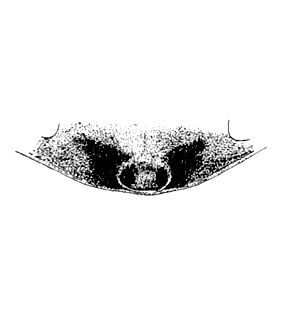
Epigyne, ventral view
(Deeleman-Reinhold 2001)
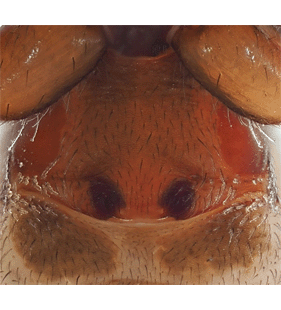
Epigyne
(Suzuki & Hisasue 2024)
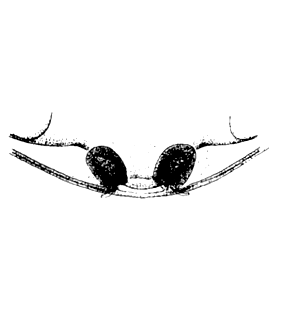
Vulva, ventral view
(Deeleman-Reinhold 2001)
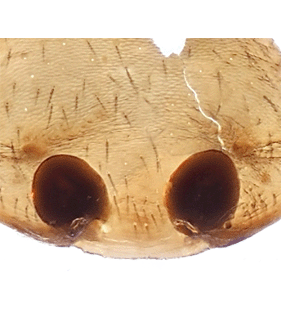
Vulva, dorsal view
(Suzuki & Hisasue 2024)
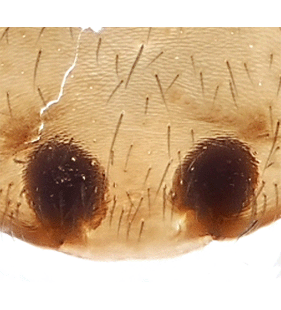
Vulva, ventral view
(Suzuki & Hisasue 2024)
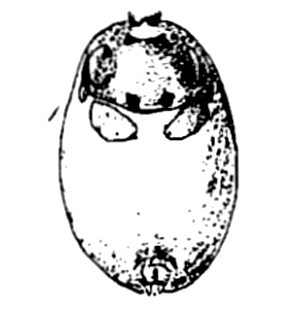
Opisthosoma, ventral view
(Deeleman-Reinhold 2001)
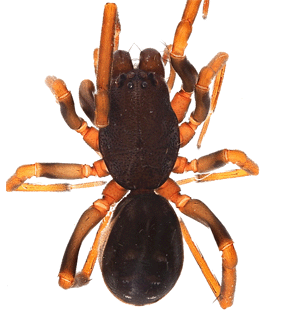
Habitus, dorsal view
(Suzuki & Hisasue 2024)
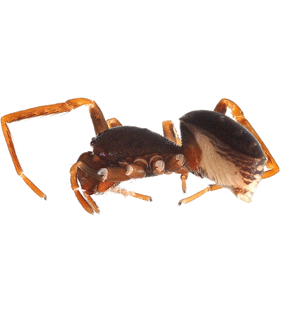
Habitus, lateral view
(Suzuki & Hisasue 2024)
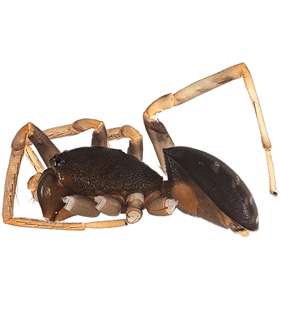
Habitus, lateral view
(Suzuki & Hisasue 2024)
Distribution List
References
Deeleman-Reinhold C L (2001) Forest spiders of South East Asia: with a revision of the sac and ground spiders (Araneae: Clubionidae, Corinnidae, Liocranidae, Gnaphosidae, Prodidomidae and Trochanterriidae [sic]). Brill, Leiden, 591 pp. 
Kielhorn K-H (2016) Beitrag zur Kenntnis der Webspinnen und Weberknechte in Berlin und Brandenburg. Märkische Entomologische Nachrichten 17(2): 261-286
Suzuki Y, Hisasue Y (2024) Discovery of presumably introduced spiders, Oedignatha scrobiculata Thorell, 1881 (Araneae, Liocranidae) and Boagrius qiong Lin & Li, 2022 (Araneae, Palpimanidae) on Chichi-jima Island, the Ogasawara Islands, Japan. Biodiversity Data Journal 12(e121421): 1-14
WSC (2026) World Spider Catalog. Version 27. Natural History Museum Bern, online at http://wsc.nmbe.ch (20.5.2026) doi: 10.24436/2